Cohort 4 Teams Announced
Fifteen entrepreneurs, nonprofits, and small business teams were selected from a field of applicants across the Pacific Northwest and beyond to join the NextCycle Washington fourth cohort. From campus-based composting systems and regenerative vermicomposting to refill technology, modular housing, and AI-enabled recycling infrastructure, a diverse set of projects has been selected to participate in the NextCycle Washington sustainable business accelerator program.
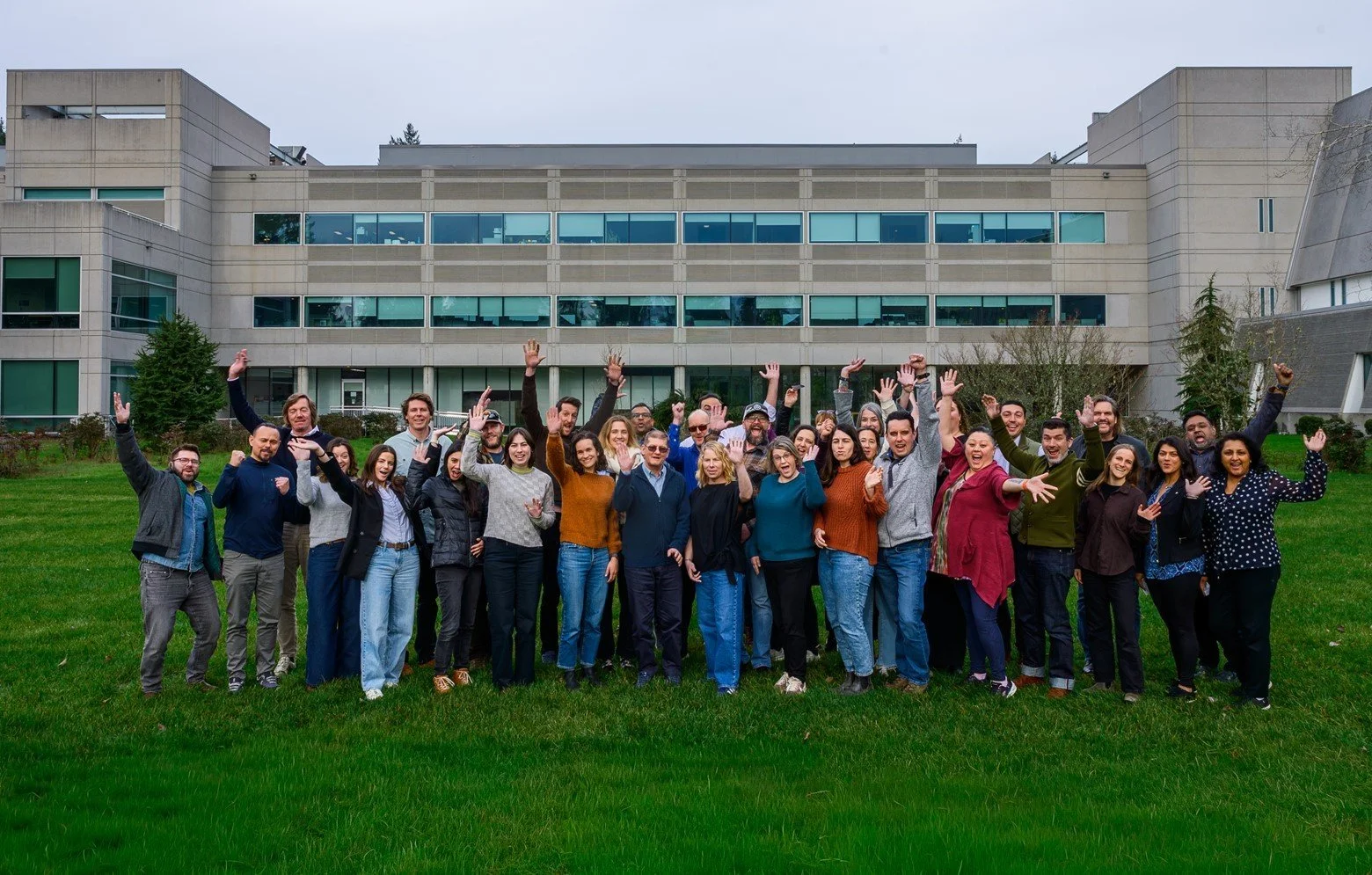
NextCycle Washington coaches and Cohort 4 teams at the Accelerator Academy in January.
The program culminates with a public showcase event on May 4, 2026, co-located with the Washington State Recycling Association annual conference in Tulalip, where the teams will pitch their projects to a live audience with opportunities to attract investors, win monetary awards, and generate broader visibility. Learn more about the conference and register for the Pitch Showcase.
Meet the teams in Cohort 4:
Central Washington University Wildcat Farm (Ellensburg): A public university leading a campus-based sustainability initiative to develop on-site composting infrastructure at CWU’s Wildcat Farm. The project will divert organic waste from landfills, generate compost for food production and landscaping, reduce methane emissions, and serve as a hands-on learning laboratory for students.
DPChem Consulting, Inc. (Auburn, WA): A for-profit renewable energy project converting commercial trap grease waste into sustainable aviation fuel and renewable natural gas. The project diverts millions of pounds of organic waste from landfills while supporting low-carbon fuel production.
Ecourage (East Lansing, MI | Washington pilot): A for-profit refill technology company providing smart, closed-loop refill systems for liquid products. Ecourage’s platform reduces single-use plastic packaging while lowering costs and emissions for brands and retailers piloting reuse models in Washington.
Encora (Seattle): A for-profit circular logistics company building verified Smart Return Hubs that streamline product returns and enable reuse and resale. Encora helps retailers reduce processing costs while recovering value from returned goods and cutting waste and reverse-logistics shipping.
God’s Country Compost (Oroville, WA): A locally owned composting service transforming agricultural, commercial, and food system organic waste into high-quality compost. The project supports soil health, local agriculture, and rural circular economies throughout Okanogan County.
Hive5 (Renton): A for-profit person-to-person rental platform that enables people to share underused household and recreational items. Hive5 keeps products in use longer, reduces unnecessary consumption, and helps community members earn supplemental income.
Next Rep (Poulsbo): A community sports marketplace where people can donate, sell, and buy gently used sports gear while giving back to local grassroots sports teams. Next Rep keeps gear in play longer and helps make sports more affordable and accessible. www.nextrepsports.io
Pacific Sky Power, LLC (Seattle): A for-profit company expanding from clean energy innovation into modular housing through its Rogue Cabin project. Rogue Cabin delivers adaptable, human-scale living solutions using modular design and circular materials to reduce material use and lifecycle impacts.
Recycletek (Sunnyvale, CA | Washington expansion): A for-profit company advancing deposit-return schemes through an AI-enabled platform that integrates robotics and customer-facing software. The technology improves efficiency and supports data-driven recycling infrastructure as Washington explores DRS solutions.
Something Borrowed Exchange (Seattle): A community-based platform reducing wedding waste by enabling members to share, borrow, and gift décor and supplies at no cost. The exchange makes weddings more affordable and sustainable by normalizing reuse over single-use purchases.
ReUse Depot (Bainbridge Island): A nonprofit reuse and repair hub fiscally sponsored by Sustainable Bainbridge. ReUse Depot brings together a Library of Things, repair workshops, material exchanges, and hard-to-recycle collection services to make sharing, fixing, and reuse accessible to the community.
SvaDhruthi (Washington): A community-powered sewing co-op expanding garment repair, reuse, and hands-on skill building. Through its ThreadTogether program, SvaDhruthi runs repair cafés and upcycling workshops, routes donated textiles for reuse or remanufacturing, and supports local livelihoods while preventing textile waste. www.svadhruthi.org
Studio Viridian (Seattle): A design-build-develop firm creating living laboratories that test circular construction and sustainable living systems. Viridian’s projects explore how beauty and performance can coexist through experimentation and open knowledge-sharing.
Worm to Farm (Odessa, WA): A for-profit regenerative vermicomposting operation converting food scraps and organic waste into nutrient-rich soil amendments. Worm to Farm supports farmers, ranchers, and gardeners by restoring soil health and strengthening regional food systems.
Zabble (Walnut Creek, CA | Washington expansion): A for-profit technology company offering an AI-powered platform for end-to-end waste management. Zabble provides granular insights and targeted outreach to jurisdictions, haulers, and campuses across 70 U.S. cities to reduce contamination and boost diversion rates.